












From airports to campuses to utility networks, we engineer the systems communities rely on every day. Our work spans environments that demand precision, resilience, and long‑term performance. Each project reflects our commitment to designing infrastructure that supports growth and strengthens the places people live and work.
We understand the unique challenges that define every industry we serve. Whether navigating the complexities of transportation corridors or the evolving needs of institutional campuses, our teams bring the insight required to deliver solutions that last. We approach each environment with a clear understanding of its operational, regulatory, and community context.
Our experience extends across markets where reliability and safety are non‑negotiable. We collaborate closely with clients to anticipate needs, manage constraints, and ensure that every system functions as intended. That partnership‑driven approach allows us to support both everyday operations and long‑term strategic goals.
Across all industries, we bring the same focus on clarity, coordination, and technical excellence. Our teams work seamlessly across disciplines to deliver infrastructure that performs under pressure and adapts to future demands. It’s a model that has helped DMA support critical systems for more than three decades.
DMA has been solving complex engineering challenges since 1989. Our multi‑disciplined team brings the experience and adaptability today’s projects demand. We’ve earned trust by delivering consistent results across a wide range of markets.
We offer a full suite of services that support infrastructure at every stage of development. Each project benefits from technical depth, thoughtful planning, and a clear understanding of client priorities. Our solutions are built to perform in the real world, not just on paper.
We meet clients where they are and guide projects forward with clarity and purpose. Our teams work seamlessly across disciplines to ensure efficiency and quality. It’s a model that has defined DMA for more than three decades.
DMA’s commitment goes beyond delivering projects — we build long‑term partnerships rooted in trust, communication, and accountability. We take pride in being responsive, transparent, and proactive at every stage of the work. That mindset drives our team and shapes the way we serve clients across the country.
![]()
September 26, 2017 ::
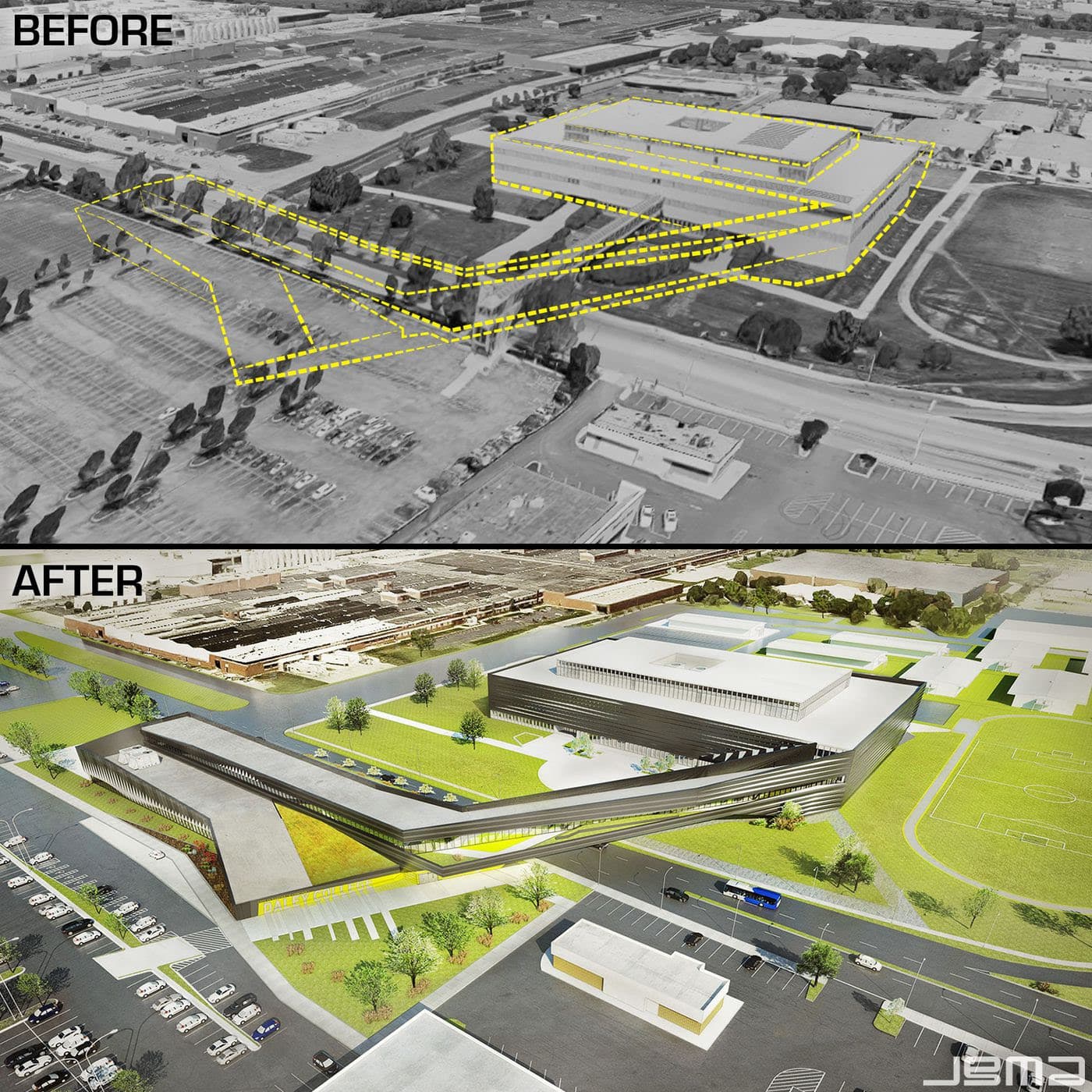
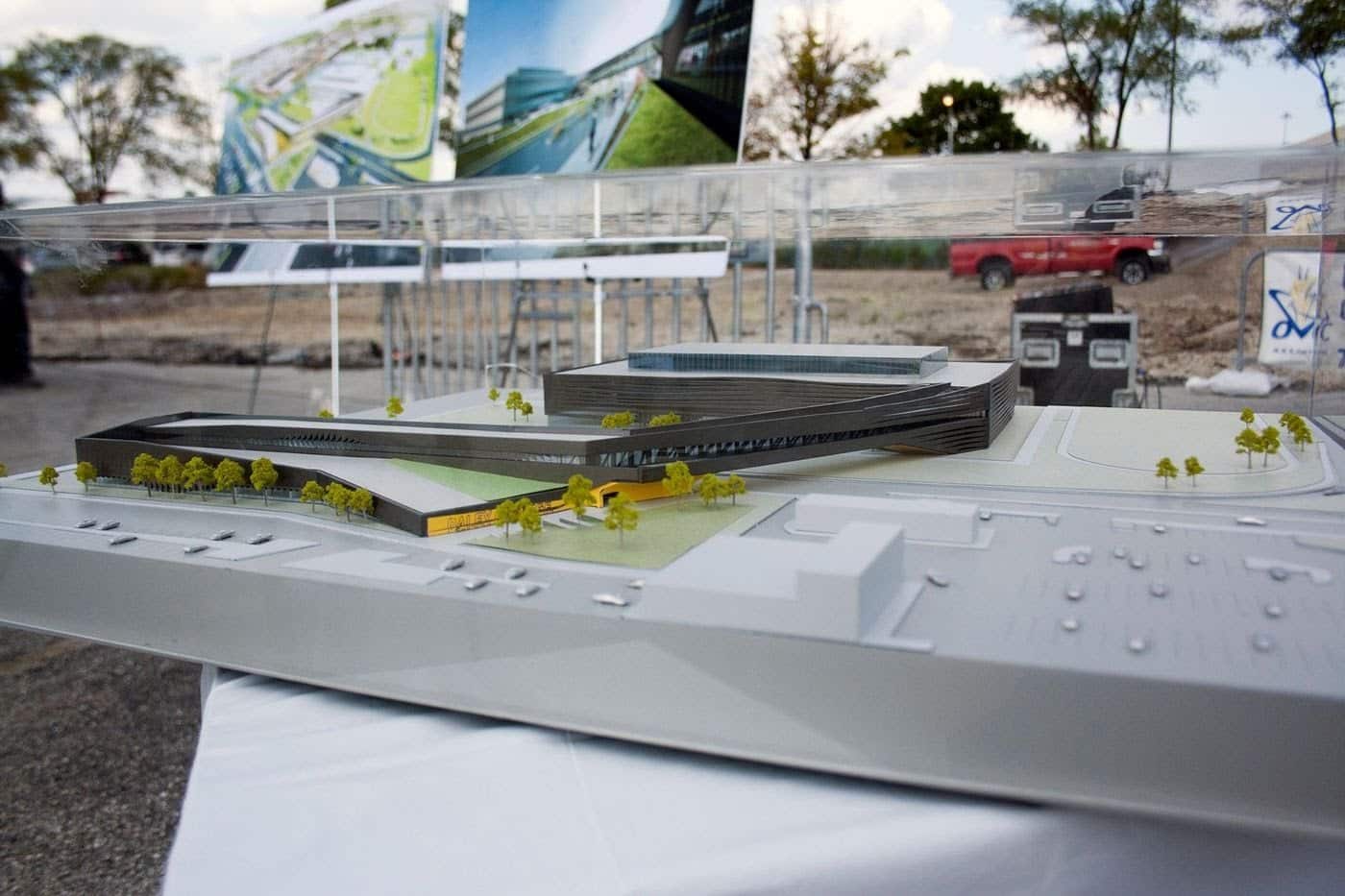
“Yesterday afternoon, Chicago Mayor Rahm Emanuel joined officials from Richard J. Daley College to break ground on the South Side school’s new Engineering and Advanced Manufacturing Center. Designed to visually unify the Daley campus, the $45 million project will reclad the existing building at 7500 S. Pulaski Road as well as construct a new 57,000-square foot addition extending south and over 76th Street.
Drawing on the designed language of the manufacturing industry, Chicago-based design architect JGMA penned the new student center with a conveyer belt-like layout with splashes of the same “caution yellow” typically seen in factories. The material choice of metal panels, glass, and exposed steel further reinforces the project’s industrial look and will help establish a framework for a wider master plan for Daley’s future expansions. JGMA is collaborating with CannonDesign who serves as the project’s educational planning architect.
In addition to providing a novel way to cross 76th Street, the Daley’s new Engineering and Advanced Manufacturing Center will contain new labs, administrative offices, and communal areas for students including exterior terraces and landscaped open space. The project’s interiors will be laid out in such a way to “intentionally collide” with seating areas and other shared spaces to encourage incidental interactions and collaboration.
According to the City College of Chicago, the upcoming facility will play a vital role in preparing Chicago students for the “more than 20,000 jobs coming to the region in the engineering and advanced manufacturing fields over the next decade.” It is targeting LEED Gold certification and is expected to welcome students by January 2019.”